learn · rocketry 101
rocketry 101
Humans have always wanted to see over the next ridge. For the first time in our species’ story, the ridge is the edge of the planet, and the next places have names: the Moon, Mars, and the dark beyond. This page keeps that wonder in the room, then teaches the foundations that make leaving Earth possible.
why we go
Look up on a clear night and you are already staring at destinations. The Moon is close enough that footprints already exist in its dust. Mars waits as a cold desert with weather, seasons, and the quiet question of whether life ever took hold there, or still does somewhere under the ice. Beyond them: asteroids, icy moons, and a solar system we have only begun to walk.
We are living in the incredible moment when going beyond Earth has become engineering we can watch. Vehicles climb, stages fall away, and hardware settles into orbits that circle our world or leave it. Searching for life, planting instruments, building the path for cargo and, someday, people: that is the work. Rockets are how the door opens.

earth · the only home we know, and the pad we leave from
The rest of this lesson is the physics and engineering vocabulary that makes those words real: thrust, stages, orbits, delta-v, mass, and the choice to fly hardware more than once.
thrust and specific impulse
Thrust is the push. It has to exceed the weight of the vehicle (plus drag and other forces) to leave the pad and keep accelerating. Specific impulse, often written Isp, is a measure of how efficiently an engine turns propellant into that push. Higher Isp means more velocity change from the same propellant mass, all else equal.
Engines optimized for sea level and engines optimized for vacuum make different tradeoffs. Each regime asks for its own balance of thrust and efficiency. Thrust gets you off the ground; efficiency shapes how far the propellant can take you once you are flying.
Thrust answers “can we lift this?” Isp answers “how thrifty is the engine with every kilogram of propellant?” You need both ideas to read a vehicle design.
why stages exist
Rockets throw away empty tanks and engines as they climb. That is staging. Each empty stage has already done its job, so the remaining vehicle climbs with less mass to accelerate. Stages are sized for chapters of the flight: thick air and high thrust early, thinner air and higher efficiency later.
Staging adds careful choreography (separations, ignition of the next stage), and the mass math rewards it for orbital flight. Most orbital vehicles you hear about are multi-stage for this reason.
energy to orbit · stage by stage
Each arrow is a separation: empty mass stays behind so the remaining vehicle can spend propellant on useful velocity.
from parts to flight · educational chain
orbits in brief
An orbit is a free-fall path that keeps missing the Earth. Height and shape determine period, coverage, and how much energy it took to get there. Once you are there, you are falling forever around a world, which is somehow both ordinary physics and still astonishing.
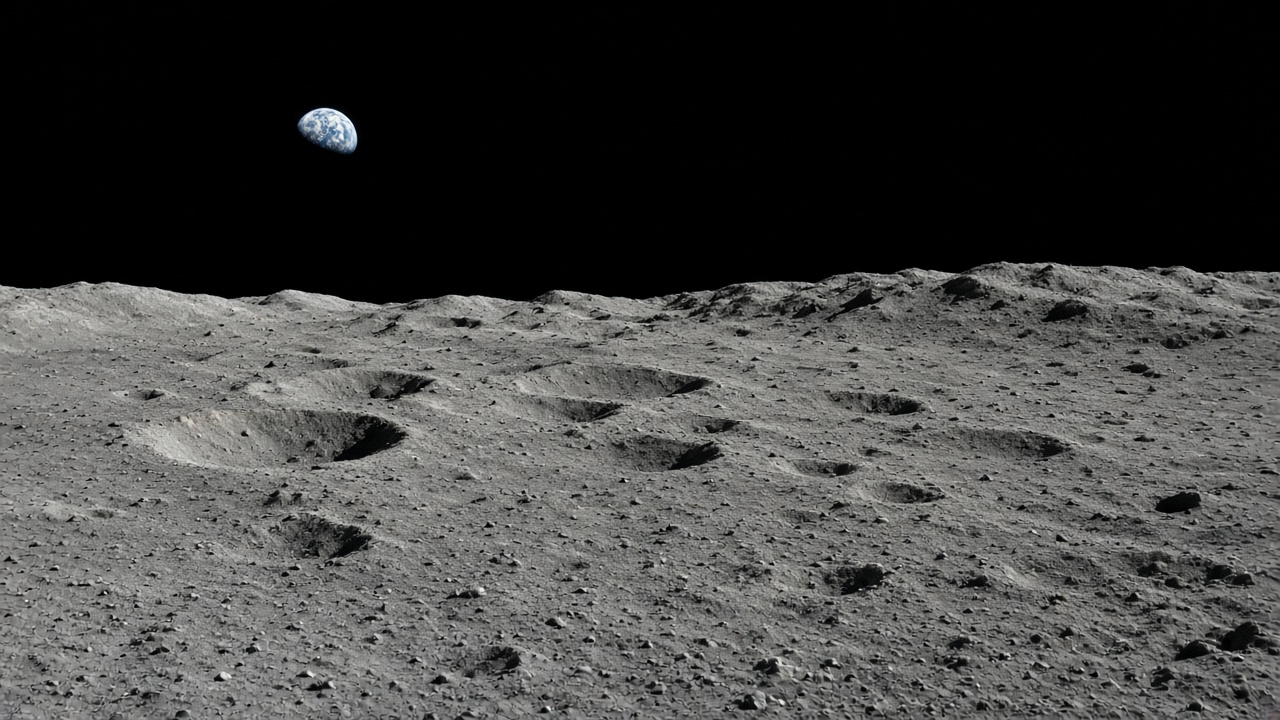
moon · nearby, hard-won, already walked
- LEO (low Earth orbit): hundreds of kilometers up, short periods, useful for Earth observation, many communications constellations, and human spaceflight near home.
- MEO (medium Earth orbit): higher than LEO, often used by navigation constellations; a middle ground in altitude and period.
- GEO (geostationary): roughly 36,000 km over the equator, matching Earth’s rotation so the satellite appears fixed in the sky from the ground.
Transfer orbits and highly elliptical paths are tools for getting from one regime to another or for lingering over a region. The names are labels for energy and geometry.
Higher orbits generally cost more energy to reach and change how the Earth “looks” from the spacecraft. LEO is nearby and fast-moving overhead; GEO is distant and hangs in place over one longitude.
what a TLE is
A Two-Line Element set (TLE) is a compact text format for describing an orbit well enough that software can predict roughly where a satellite will be. It is a practical tracking aid. Fresh data, calm drag conditions, and quiet spacecraft keep a TLE useful longer.
When you see public catalogs of objects in orbit, TLEs (or related element sets) are often what make the “where is it now?” maps possible.
delta-v intuition
Delta-v (Δv) is the budget of velocity change a vehicle can still perform. Every burn spends some of that budget. Climbing out of the atmosphere, circularizing an orbit, changing planes, and departing for the Moon or Mars each have characteristic costs.
Thinking in delta-v helps you compare missions across vehicle styles. A healthy plan keeps budget for steering, residuals, and plane changes, so the last bit of delta-v still reaches the destination.

mars · farther, colder, still calling
Treat delta-v like fuel money for maneuvers. Getting to orbit is expensive. Changing the tilt of an orbit can be surprisingly expensive. Leaving Earth entirely is another bill on top.
payload vs propellant
Most of a rocket’s liftoff mass is propellant. Structure and engines take another share. Payload (the satellite, crew capsule, or cargo) is a precious fraction. That is the rocket equation in everyday language: each extra bit of payload invites more propellant, which invites more structure, which invites more propellant.
This is why engineers obsess over dry mass, why staging helps, and why refueling or reusing hardware becomes strategically interesting. Small percentage changes at the bottom of the stack ripple upward.
reusability as a rule of thumb
Expendable rockets put the whole vehicle into each flight’s cost. Reusable stages bring hardware home so the marginal cost of a flight can lean toward propellant, operations, and refurbishment. The payoff grows with how often you fly, how gentle recovery is, and how the design balances performance with landing.
Reusability is an economic and operational design choice. Bring hardware home, refresh it, and fly again. At high flight rates with quick turnaround, that choice can reshape what missions become routine.
Ask how many flights the hardware is meant to fly, what returns each time, and how performance and recovery share the design. Cadence and refurbishment matter alongside the landing highlight reel.
closing rules of thumb
- Thrust lifts; Isp stretches the propellant; staging drops dead weight.
- Orbit names are shorthand for energy and geometry (LEO, MEO, GEO).
- Delta-v is the common currency of maneuvers.
- Payload is precious because propellant and structure dominate the mass budget.
- Reusability is a cadence and cost story, with landing as one vivid chapter.
- The point of the machinery is still wonder: Moon, Mars, and the chance to learn whether we are alone.
Applied orbital mechanics with sketchable numbers belongs in 201. It will appear on the courses hub when that draft is ready.