edition 2life beyond earth

stellar times

stellar times · baa.business · all you need to know about humanity’s journey to the moon, mars, and beyond

the lead · life beyond earth

nasa’s chief thinks mars once had life. the rocks that could show it are still waiting on mars.

Jared Isaacman, NASA’s 15th administrator, says there is “a very good chance” samples brought back from Mars will show microbial life lived there once. the program to bring Perseverance’s samples home was cancelled in January, and Europa Clipper reaches Jupiter on 04/11/2030 (NASA target).
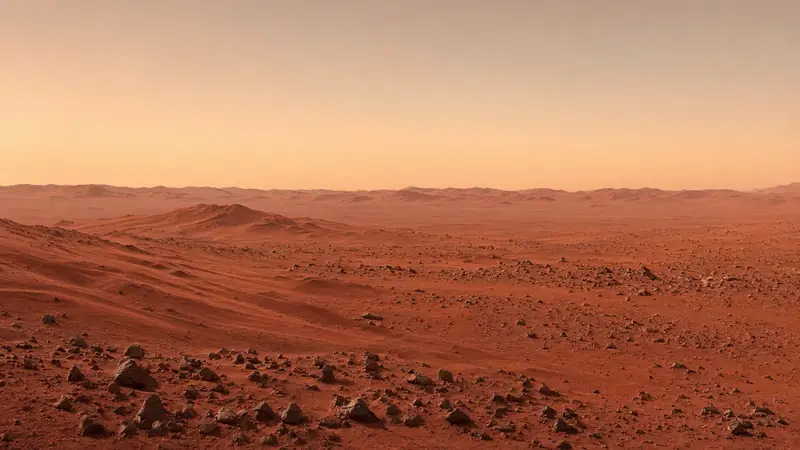
illustration of an empty rocky martian plain at dusk
illustration, baa art. not a mission photo. the samples Perseverance collected are still on Mars.

Isaacman said it on pod force one, the NY Post’s podcast, on 08/05/2026: “a very good chance” of proving microbial life once existed on Mars, with samples brought back to Earth. the full quote is waiting on an audio check, so only those words appear here.

in April, during Artemis II, he told CNN: “I would say the odds that we will find something at some point to suggest that we are not alone are pretty high.” the search, he said, “goes to the heart of many things that we do at Nasa.”

the twist is the ride home. Congress’s FY2026 appropriations “does not support the existing Mars Sample Return (MSR) program” and kept $110 million for Mars Future Missions technology. on 04/27/2026 Isaacman told House appropriators the mission “was conceived to cost up to $4 billion and in just a few years ballooned to over $10 billion, with $2 billion in taxpayer funds already spent.”

the rock everyone wants is Perseverance’s “Sapphire Canyon” sample, which NASA called a potential biosignature on 09/10/2025. China’s Tianwen-3 targets a 2028 launch and a 2031 return (China target), which Live Science reads as leaving China to retrieve signs of life from Mars.

farther out, Europa Clipper is not a life-detection mission. it will check whether Europa’s ocean has the ingredients and energy for life (NASA).

“a very good chance”
on proving past life on Mars with returned samples · pod force one · 08/05/2026 · NY Post
“the odds that we will find something … are pretty high.”
CNN State of the Union · 04/05/2026 · CNN
“ballooned to over $10 billion”
on Mars Sample Return, to House appropriators · 04/27/2026 · testimony
dig inclosewho he is, what MSR cost, what is left, what to watch

context

Isaacman was nominated 11/04/2025, confirmed by the Senate 12/17/2025 (67 to 30) and sworn in 12/18/2025. he was still in the job this week: a WESH interview after the Crew-13 launch on 10/01/2026, and the Boeing and NASA Starliner update on 09/28/2026.

the numbers

  • up to $4 billion MSR’s original cost, in Isaacman’s testimony
  • over $10 billion what it grew to, “in just a few years”
  • $2 billion already spent, same testimony
  • $110 million kept for Mars Future Missions technology, FY2026
  • 2028 / 2031 Tianwen-3 launch and return (China target)
  • 04/11/2030 Europa Clipper at Jupiter (NASA target)

why it matters

the administrator’s best bet for proving past life is Mars rock on Earth, and those samples have no ride home today. Clipper and Dragonfly can show whether ocean worlds have what life needs. neither is built to detect life itself.

what to watch

  • any NASA sample-return plan in the FY2027 budget
  • Europa Clipper’s Earth flyby on 12/03/2026 (NASA target)
  • Dragonfly’s launch window, 07/05 to 07/25/2028 (NASA target)

sources

NASA, 12/18/2025 · CNN, 12/17/2025 · WESH, 10/01/2026 · Boeing, 09/28/2026 · pod force one · 08/05/2026 · NY Post, 08/05/2026 · The Guardian, 04/05/2026 (quote text) · Space.com, 01/2026 · Live Science · House testimony, 04/27/2026 · NASA, 09/10/2025 · NASA Clipper FAQ

feature · 2026 to 2031

what happens next: the next five years, mission by mission

mostly robots going first: to the lunar south pole, to Mars’ moons, to Jupiter and Titan. people follow in 2027 (Earth orbit) and 2028 (the lunar surface), on NASA’s targets.

  1. 2026
  2. 10/19 · JAXA target MMX launches on H3 for Phobos and Deimos, a sample return
  3. 11/18 · NASA Voyager 1 reaches one light-day
  4. 12/03 · NASA target Europa Clipper Earth flyby
  5. 12/2026 or 01/2027 · NASA/Boeing target uncrewed Starliner-1 to the station; crewed Starliner-2 in 2028 (NASA target)
  6. by year end · company target Amazon Leo limited commercial service
  7. Q4 · ISRO target Gaganyaan G1, uncrewed
  8. no SpaceX date Starship Flight 15, first ship catch attempt planned
  9. 2027
  10. no new date · China Chang’e-7 to the lunar south pole; China called off its 2026 window, and press reports read that as 2027
  11. 01/2027 on NASA’s list Blue Moon Mark 1 lander with two NASA payloads, “possibly as early as spring 2027” (Ars)
  12. early 2027 · company targets Vast Haven-1, Stoke Nova first orbital try, Google’s two-satellite Suncatcher
  13. summer · NASA target Artemis III: Orion with commercial landers in Earth orbit
  14. 2027 onward · NASA target robotic landers and rovers to the south pole, “near monthly”
  15. 09/2027 · NASA target ESCAPADE arrives at Mars
  16. Q4 · SpaceX target first Starmind AI1 orbital compute satellites
  17. 2028
  18. 2028 · NASA target Artemis IV: astronauts on the Moon
  19. 07/05 to 07/25 · NASA target Dragonfly launches for Titan, arriving 2034
  20. 2028 · China target Tianwen-3 launches for Mars samples, return 2031
  21. 12/2028 · NASA target SR-1 Freedom to Mars, carrying three SkyFall helicopters
  22. 2030 and 2031
  23. by 2030 · China target first Chinese crew on the Moon
  24. 04/11/2030 · NASA target Europa Clipper at Jupiter
  25. 07/21/2031 · ESA nominal Juice at Jupiter
dig inclosesources for every line

feature · compute in orbit

the first data centers above the clouds are about the size of a fridge

on the ground, AI needs power, land and cooling. in orbit there is steady sunlight and room. the first flights are small, and the plans get very large very fast.

  1. 1 GPUStarcloud-1, one Nvidia H100, 11/2025
  2. about 1 kWGoogle’s Suncatcher test, four TPUs, 10/01/2026
  3. 1.5 kW a satelliteTakeMe2Space, two laser-linked satellites, late 2028 (company target)
  4. 175 kW a satelliteSpaceX AI1, average compute, first launches Q4 2027 (SpaceX target)
  5. 1 GW a yearSpaceX’s described goal for its run-rate by end of 2027, then 10x a year

flying now or just launched

  • Starcloud-1 launched 11/2025 and trained a small language model in orbit.
  • Axiom Space launched its first two orbital data center nodes on 01/11/2026 with Kepler’s optical relays.
  • ADA Space (China) has 12 “Three-Body” computing satellites up; China’s plan is 2,800 compute satellites by 2035.
  • Supercomputing-1 (China) launched 09/20/2026 to process its own Earth pictures in orbit.
  • Google Suncatcher launched 10/01/2026 with Planet: four TPUs, about 1 kW, running Gemini in 15-minute bursts while the radiators catch up.
  • TakeMe2Space MOI-1a (India) was scheduled on the same 10/01/2026 rideshare.

announced, owner on every date

  • SpaceX Starmind AI1: first launches Q4 2027 (SpaceX target); deployment “as early as 2028” (SEC filing). FCC application for up to 1 million satellites, accepted for filing 02/04/2026, not approved.
  • Blue Origin Project Sunrise: FCC application for up to 51,600 satellites; NASA filed concerns in 05/2026. no date or power figure found.
  • Starcloud: an AI payload to lunar orbit on Firefly’s Elytra, NET 2028 (company target).
  • Aetherflux: commercial operation Q1 2027 (company target).
  • TakeMe2Space: two 1.5 kW satellites with 10 Nvidia Thor GPUs each, late 2028 (company target).
  • Anthropic will study using SpaceX orbital data centers. exploratory, no contract disclosed.
dig inclosethe hard parts, the specs, sources

the hard parts

heat has to be radiated away, there is no air or water to carry it (Google runs 15-minute bursts; SpaceX lists radiators, vapor chambers and loops). radiation flips bits in off-the-shelf chips. launch mass is the big one: SpaceX’s own math is about 1 million tons a year to orbit for 100 GW a year. NASA’s administrator, 08/05/2026: “I would not bet against the orbital data centers,” and he noted solar fades far from the Sun, so the idea works close to Earth.

the numbers

  • 250 kW peak / 175 kW average AI1 compute per satellite, SpaceX Starmind page as fetched 10/03/2026
  • 75 kW per ton same page; an 08/25/2026 report quoted 70, so the published spec has grown since August
  • 1.4 GW SpaceX’s ground AI compute, nameplate, 06/30/2026 (SEC)

what to watch

first results from Google’s test, Starcloud-2’s date, and any FCC action on the SpaceX and Blue Origin filings.

sources

CNBC, 12/10/2025 · Axiom · Kepler · Xinhua, 04/25/2026 · Tom’s Hardware, 09/23/2026 · Google · NPR, 10/02/2026 · Business Standard, 09/28/2026 · SpaceX Starmind · MLQ, 08/25/2026 · FCC · Reuters, 01/31/2026 · Tom’s Hardware, 06/09/2026 · SpaceNews, 05/07/2026 · DCD, 05/12/2026 · SpaceNews on Blue Origin · GeekWire, 09/30/2026 · Starcloud · Aetherflux · SpaceX Q2 release, SEC

tonight · play with it

what time is it on mars

coordinated mars time

live

at jezero crater, perseverance’s home (local mean solar time)

live

mars sol date

live

uses NASA GISS’s Mars24 algorithm. Jezero sits at about 77.5° east (NASA JPL); the rover’s own mission clock can differ by minutes.

light-delay calculator

13.7 minutes one way

send it now and it arrives at about 7:44 p.m. ET. a reply would land around 7:58 p.m.

one-way light time, 10/03/2026, BAA calc from JPL Horizons. values are fixed for this edition.

how many launches is a gigawatt

133 launches for 1 GW (7.5 MW a launch)

BAA calc. defaults: Starship V3’s 100+ t design figure (not demonstrated to orbit so far) and SpaceX’s 75 kW per ton for AI1 (Starmind page, 10/03/2026). SpaceX’s own 100 GW math works out to 100 kW per ton.

projections · BAA projection, not a forecast of record

how much computing could be in orbit, and how much of the internet comes from space

compute in orbit, megawatts at year end BAA projectioncumulative payload power, all operators, log scale. low, base and high cases.

2030, base: 1,000 MW (1 GW) · low 20 · high 15,000

share of the internet served from space BAA projectionthe rest comes over the ground: fiber, cable, cell towers. direct-to-phone satellite service is left out.

2030, base: space 1.49% · ground 98.51%

dig incloseassumptions, anchors, the full tables, sources

compute: anchors and math

anchors: Starcloud-1, one H100 (2025) · Google test about 1 kW (10/2026) · TakeMe2Space 1.5 kW a satellite (2028) · Starcloud-2 (2027, company target) · SpaceX AI1 175 kW average a satellite, first launches Q4 2027 (SpaceX target), “as early as 2028” (SEC), “meaningful amounts” by 2029 (SpaceX CFO) · Starship V3 designed for 100+ t to low orbit (design figure, not demonstrated to orbit so far).

launch math (BAA calc): one Starship with 100 t of AI1 satellites at 75 kW per ton is 7.5 MW a launch, so 1 GW is about 133 launches carrying only compute. SpaceX’s own figure, 100 GW a year from about 1 million t a year, works out to 100 kW per ton.

year endlowbasehighwhat has to be true for base
2025under 0.01about 0.010.01Starcloud-1 plus China’s 12 compute satellites (order of magnitude only)
20260.010.030.05Google, Supercomputing-1, TakeMe2Space, more Three-Body satellites, each about 1 kW class
20270.05250Starcloud-2, Aetherflux, Google’s pair, about 10 AI1 satellites in Q4 (1.75 MW)
2028140500about 230 AI1 satellites, 5 to 6 Starship launches
202952503,000about 33 compute launches in total
2030201,00015,000about 133 compute launches in total; Starship flying weekly or better
2031502,50040,000second-generation satellites, more operators

SpaceX’s stated aspiration implies far more (10 GW a year around 2029, 100 GW a year around 2030). it is shown as context, not as a case.

internet: anchors and assumptions

anchors: 6.0 billion people online in 2025, 74% of the world, 2.2 billion offline (ITU) · 7.3 ZB fixed and 1.5 ZB mobile traffic in 2025, growing about 16% and 19% a year (ITU) · Starlink 8.9M subscribers at end 2025 and 12.0M at 06/30/2026 (SpaceX Q2, SEC) · forecasts: TMF 35M+ to 45M+ in 2030, Deutsche Bank 102M by 2031 · US fixed broadband 711 GB a month (OpenVault, Q2 2026).

BAA assumptions: 2.5 people per satellite subscription · internet users grow 3.3% a year · an average satellite subscription uses 400 GB a month in 2025, rising 10% a year · yearly traffic uses the average of start and end subscribers · direct-to-phone satellite service is excluded.

year endsatellite subs, low / base / highpeople, baseusers from space, low / base / hightraffic from space, low / base / high
20258.9M (actual)22M0.37%0.36%
202616 / 18 / 19M45M0.65 / 0.73 / 0.77%0.64 / 0.69 / 0.72%
202721 / 25 / 30M62M0.82 / 0.98 / 1.17%0.90 / 1.05 / 1.19%
202826 / 31 / 45M78M0.98 / 1.17 / 1.70%1.08 / 1.28 / 1.72%
202930 / 36 / 65M90M1.10 / 1.32 / 2.38%1.21 / 1.45 / 2.38%
203036 / 42 / 88M105M1.27 / 1.49 / 3.12%1.35 / 1.59 / 3.13%
203140 / 48 / 105M120M1.37 / 1.65 / 3.60%1.47 / 1.74 / 3.72%

base: TMF’s 2030 midpoint (40M) plus about 2M for Amazon Leo and others. high: Deutsche Bank’s path to 102M by 2031 plus others. capacity is not the limit on share in this window; subscribers are.

sources

SpaceX Starmind · SpaceX Starship · SpaceX Q2 release, SEC · MLQ, 08/25/2026 · ITU users · ITU traffic · SatNews, 06/07/2026 (TMF) · Advanced Television, 07/29/2026 · OpenVault, 07/22/2026. BAA projections are labeled.

the briefs · 15 stories, current and upcoming

around the industry this week

people on the calendar

NASA’s two crewed promises, for 2027 and 2028.

  1. NASA promised an “artemis acceleration” update for early October, and the administrator says he is “very confident” in summer 2027 for Artemis III (NASA target). no update was out as of 10/03 evening

    09/23 and 10/01/2026 · Payload · WESH · NASA architecture

  2. starliner gets another try: uncrewed to the station in December or January (NASA/Boeing target), then a crewed flight under Woody Hoburg in 2028 (NASA target)

    09/28/2026 · Boeing · SpacePolicyOnline · Space.com · Spaceflight Now

moons, near and far

robots go first: the lunar south pole and Mars’ moons.

  1. china called off Chang’e-7’s 2026 launch window, and NASA’s chief says the US “may have dodged a bullet” at Shackleton crater

    08/23 and 09/23/2026 · Xinhua · Ars Technica, 08/23 · Ars Technica, 09/24

  2. the first upright landing at the moon’s south pole could be american: Blue Moon Mark 1, January 2027 on NASA’s list, possibly spring 2027 per Ars

    09/24/2026 · Ars Technica · NASA · NASA CLPS

  3. japan’s MMX leaves for Mars’ moons on 10/19 ET (JAXA target), to bring a piece of Phobos home: the first sample return from the Mars system

    launch 10/19/2026, 3:41 p.m. ET · JAXA · JAXA mission · NASA

computers in orbit

from a fridge-sized test to a factory for thousands.

  1. google’s first orbital data center test is up: four TPUs, about 1 kW, 15 minutes of work at a time (Ars)

    10/01/2026 · Google · Ars Technica · NPR

  2. a data center for the moon: Starcloud’s AI payload rides Firefly’s Elytra to lunar orbit, NET 2028 (company target)

    09/30/2026 · GeekWire

  3. india’s TakeMe2Space books two laser-linked compute satellites on Falcon 9 for late 2028 (company target)

    09/28/2026 · Business Standard

  4. china launched Supercomputing-1, a satellite that thinks about its pictures before sending them down, its third orbital compute effort

    09/20/2026 launch, 09/23 report · Tom’s Hardware · China in Space

  5. SpaceX aims for Q4 2027 for its first orbital compute satellites on Nvidia’s Vera Rubin, and its SEC filings say “as early as 2028”

    08/24/2026 · Nvidia · SpaceX Starmind · MLQ, 08/25 · FCC

follow the money

about $2.06 billion raised in September for rockets, tugs and reentry (BAA calc).

  1. stoke raised $1 billion for a fully reusable rocket and aims for its first orbital try in early 2027 (company target)

    09/08/2026 · Stoke Space

  2. varda raised $251 million to process drugs in orbit and fly them home at Mach 25

    09/30/2026 · PR Newswire

  3. impulse space’s Series D grew to $808 million as its backlog grows

    09/16/2026 · Reuters · Impulse · SpaceNews

internet from above

one network doubled, the other is still waiting to switch on.

  1. amazon leo still plans limited service by year end (company target), after launch delays slowed the build-out

    09/10/2026 · SpaceNews · PCMag · GeekWire

  2. starlink doubled in a year to 12.0 million subscribers, and average revenue per user fell to $66 from $85

    08/04/2026 (Q2) · SpaceX Q2 release, SEC

“That’s one small step for (a) man, one giant leap for mankind.”
Neil Armstrong, Apollo 11, 07/20/1969 · NASA
“We choose to go to the Moon in this decade and do the other things, not because they are easy, but because they are hard.”
John F. Kennedy, Rice University, 09/12/1962 · JFK Library
“Look again at that dot. That’s here. That’s home. That’s us.”
Carl Sagan, Pale Blue Dot, 1994 · The Planetary Society
“We came all this way to explore the Moon, and the most important thing is that we discovered the Earth.”
Bill Anders, Apollo 8, Earthrise, 12/24/1968 · NASA
“The Earth is the cradle of humanity, but one cannot live in the cradle forever.”
Konstantin Tsiolkovsky, letter, 1911 (translations vary) · NASA
“Remember to look up at the stars and not down at your feet.”
Stephen Hawking, ABC interview, 06/2010 · BBC
“Poyekhali! (Let’s go!)”
Yuri Gagarin, liftoff of Vostok 1, 04/12/1961 · ESA
“I would say the odds that we will find something at some point to suggest that we are not alone are pretty high.”
Jared Isaacman, NASA administrator, CNN, 04/05/2026 · The Guardian
“Mars is going to suck to live in.”
Jared Isaacman, NASA administrator, 08/05/2026 · NY Post
“I would not bet against the orbital data centers.”
Jared Isaacman, NASA administrator, 08/05/2026 · NY Post
“Space is the future of data centers, and the moon is the next frontier for that vision.”
Ezra Feilden, Starcloud CTO, 09/30/2026 · GeekWire
“This moment belongs to the thousands of people across fourteen countries who built, tested, and trusted this vehicle.”
Amit Kshatriya, NASA associate administrator, after Artemis II splashdown, 04/10/2026 · NASA
1 of 12

music · a new show

space station by dj abba and friends

now docking

episode 1 · coming soon

00:00soon

long mixes for long trips, made with friends. episode 1 is still in the airlock. loop me in and we will tell you when it docks.

closing segment

jupiter jazz

every episode ends a little farther out. the name is borrowed with respect from Underground Resistance, the Detroit collective, who got to Jupiter first.

the last word · every week

ben’s countdown to mars

first human steps onto Mars · 01/20/2036 · BAA est.

3,395d 16h 30m 00s

3,396 calendar days from today in ET · about 3,305 sols · the clock counts to noon ET (EST) on 01/20/2036

done medium low BAA confidence that a date holds within about 3 months · life beyond earth agency dates for missions that look for life’s ingredients and new worlds, set apart from the BAA chain · open any row’s “show the math”

  1. #01

    Booster caught by the launch tower

    10/13/2024 · SpaceX Flight 5

    proves: Super Heavy can come home and be reused fast. launches: 1

    show the math

    done on 10/13/2024. counting from then to today, 10/03/2026 ET:

    1. rest of 2024 after oct 13: oct 18 + nov 30 + dec 31 = 79
    2. full years: 2025 (365) = 365
    3. into 2026: oct 3 is day 276 of the year
    4. total: 79 + 365 + 276 = 720 days

    720 days ago.

    ✓720 days agodone
  2. #02

    Raptor engine relit in space

    11/19/2024 · SpaceX Flight 6

    proves: the ship can fire its engines on command in orbit, needed for every deorbit and transfer burn. launches: 1

    show the math

    done on 11/19/2024. counting from then to today, 10/03/2026 ET:

    1. rest of 2024 after nov 19: nov 11 + dec 31 = 42
    2. full years: 2025 (365) = 365
    3. into 2026: oct 3 is day 276 of the year
    4. total: 42 + 365 + 276 = 683 days

    683 days ago.

    ✓683 days agodone
  3. #03

    A flown booster flies again

    05/27/2025 · SpaceX Flight 9

    proves: boosters are reusable hardware, not throwaway stages. launches: 1

    show the math

    done on 05/27/2025. counting from then to today, 10/03/2026 ET:

    1. rest of 2025 after may 27: may 4 + jun 30 + jul 31 + aug 31 + sep 30 + oct 31 + nov 30 + dec 31 = 218
    2. into 2026: oct 3 is day 276 of the year
    3. total: 218 + 276 = 494 days

    494 days ago.

    ✓494 days agodone
  4. #04

    First orbital Starship and first V3s delivered to orbit

    09/28/2026 · SpaceX Flight 14

    proves: the ship can reach orbit, do real work, and come back on target. launches: 1

    show the math

    done on 09/28/2026. counting from then to today, 10/03/2026 ET:

    1. sep 2 (rest of sep after the 28th) + oct 3 = 5

    5 days ago.

    ✓5 days agodone
  5. ◇

    MMX launches for Mars’ moons, to bring a piece of Phobos home

    10/19/2026 · 3:41 p.m. ET · JAXA target · JAXA

    proves: a sample from a moon of Mars can come to Earth.

    show the math

    from today, 10/03/2026 ET, to 10/19/2026, counting calendar days:

    1. oct 3 to oct 19: 19 minus 3 = 16

    ≈ 2.3 weeks · ≈ 0.04 years (365.25 days a year).

    16dayslife beyond earth
  6. ◇

    Voyager 1 is one light-day from Earth

    11/18/2026 · 5:16 a.m. ET · NASA · NASA

    proves: the first human-made object a full day of light away.

    show the math

    from today, 10/03/2026 ET, to 11/18/2026, counting calendar days:

    1. oct 28 (rest of oct after the 3rd) + nov 18 = 46

    ≈ 6.6 weeks · ≈ 0.13 years (365.25 days a year).

    46dayslife beyond earth
  7. ◇

    Europa Clipper swings past Earth, about 2,000 miles up

    12/03/2026 · NASA target · NASA

    proves: the last gravity push Clipper needs to reach Jupiter.

    show the math

    from today, 10/03/2026 ET, to 12/03/2026, counting calendar days:

    1. oct 28 (rest of oct after the 3rd) + nov 30 + dec 3 = 61

    ≈ 8.7 weeks · ≈ 0.17 years (365.25 days a year).

    61dayslife beyond earth
  8. #05

    Ship caught by the launch tower

    03/20/2027 · BAA est.

    proves: the upper stage can come back whole, so it can fly again. launches: 2 to 3 more test flights first

    show the math

    from today, 10/03/2026 ET, to 03/20/2027, counting calendar days:

    1. rest of 2026 after oct 3: oct 28 + nov 30 + dec 31 = 89
    2. into 2027: mar 20 is day 79 of the year
    3. total: 89 + 79 = 168 days

    ≈ 24.0 weeks · ≈ 0.46 years (365.25 days a year).

    168dayslow
  9. #06

    First tanker Starship flies

    05/20/2027 · BAA est.

    proves: a stripped-down ship built only to carry propellant, the workhorse of every refill. launches: 1

    show the math

    from today, 10/03/2026 ET, to 05/20/2027, counting calendar days:

    1. rest of 2026 after oct 3: oct 28 + nov 30 + dec 31 = 89
    2. into 2027: may 20 is day 140 of the year
    3. total: 89 + 140 = 229 days

    ≈ 32.7 weeks · ≈ 0.63 years (365.25 days a year).

    229dayslow
  10. #07

    Artemis III: crewed Orion docks with one or both commercial landers in Earth orbit

    06/30/2027 · NASA target mid-2027

    proves: people and Starship working together in space. launches: 1 Starship plus NASA's SLS rocket

    show the math

    from today, 10/03/2026 ET, to 06/30/2027, counting calendar days:

    1. rest of 2026 after oct 3: oct 28 + nov 30 + dec 31 = 89
    2. into 2027: jun 30 is day 181 of the year
    3. total: 89 + 181 = 270 days

    ≈ 38.6 weeks · ≈ 0.74 years (365.25 days a year).

    270daysmedium
  11. #08

    A caught ship flies again

    08/15/2027 · BAA est.

    proves: both stages reused, which is what makes dozens of tanker flights affordable. launches: 1

    show the math

    from today, 10/03/2026 ET, to 08/15/2027, counting calendar days:

    1. rest of 2026 after oct 3: oct 28 + nov 30 + dec 31 = 89
    2. into 2027: aug 15 is day 227 of the year
    3. total: 89 + 227 = 316 days

    ≈ 45.1 weeks · ≈ 0.87 years (365.25 days a year).

    316dayslow
  12. ◇

    ESCAPADE twin orbiters reach Mars

    09/2027 · NASA target · NASA

    proves: two small orbiters can study how Mars loses its air.

    show the math

    from today, 10/03/2026 ET, to 09/01/2027, counting calendar days:

    1. rest of 2026 after oct 3: oct 28 + nov 30 + dec 31 = 89
    2. into 2027: sep 1 is day 244 of the year
    3. total: 89 + 244 = 333 days

    ≈ 47.6 weeks · ≈ 0.91 years (365.25 days a year).

    NASA gives no day; 09/01 is used for the math, so read it as about 333.

    ≈ 333dayslife beyond earth
  13. #09

    Ship-to-ship propellant transfer in orbit

    10/15/2027 · BAA est.

    proves: two ships dock and move super-cold propellant, the key that unlocks both the Moon and Mars. launches: 2, a few days apart

    show the math

    from today, 10/03/2026 ET, to 10/15/2027, counting calendar days:

    1. rest of 2026 after oct 3: oct 28 + nov 30 + dec 31 = 89
    2. into 2027: oct 15 is day 288 of the year
    3. total: 89 + 288 = 377 days

    ≈ 53.9 weeks · ≈ 1.03 years (365.25 days a year).

    377dayslow
  14. #10

    Starship launching about weekly from Texas and Florida

    01/15/2028 · BAA est.

    proves: refilling needs many launches in a short span, so two coasts and fast pad turnaround matter. launches: about 4 a month

    show the math

    from today, 10/03/2026 ET, to 01/15/2028, counting calendar days:

    1. rest of 2026 after oct 3: oct 28 + nov 30 + dec 31 = 89
    2. full years: 2027 (365) = 365
    3. into 2028: jan 15 is day 15 of the year
    4. total: 89 + 365 + 15 = 469 days

    ≈ 67.0 weeks · ≈ 1.28 years (365.25 days a year).

    469dayslow
  15. #11

    Propellant kept cold in orbit for weeks

    03/01/2028 · BAA est.

    proves: boil-off is under control, so fuel waits in orbit while the next tankers arrive. launches: 1 to 2

    show the math

    from today, 10/03/2026 ET, to 03/01/2028, counting calendar days:

    1. rest of 2026 after oct 3: oct 28 + nov 30 + dec 31 = 89
    2. full years: 2027 (365) = 365
    3. into 2028: mar 1 is day 61 of the year
    4. total: 89 + 365 + 61 = 515 days

    ≈ 73.6 weeks · ≈ 1.41 years (365.25 days a year).

    515dayslow
  16. #12

    Orbital depot filled by a string of tankers

    06/15/2028 · BAA est.

    proves: a gas station in orbit that can top off a Moon or Mars ship. launches: about 10+ tankers in roughly 6 weeks (BAA est.)

    show the math

    from today, 10/03/2026 ET, to 06/15/2028, counting calendar days:

    1. rest of 2026 after oct 3: oct 28 + nov 30 + dec 31 = 89
    2. full years: 2027 (365) = 365
    3. into 2028: jun 15 is day 167 of the year
    4. total: 89 + 365 + 167 = 621 days

    ≈ 88.7 weeks · ≈ 1.70 years (365.25 days a year).

    621dayslow
  17. ◇

    Dragonfly launch window opens for Titan

    07/05/2028 · NASA target, window to 07/25 · NASA

    proves: a nuclear-powered rotorcraft leaves for Saturn’s moon Titan, arriving 2034.

    show the math

    from today, 10/03/2026 ET, to 07/05/2028, counting calendar days:

    1. rest of 2026 after oct 3: oct 28 + nov 30 + dec 31 = 89
    2. full years: 2027 (365) = 365
    3. into 2028: jul 5 is day 187 of the year
    4. total: 89 + 365 + 187 = 641 days

    ≈ 91.6 weeks · ≈ 1.75 years (365.25 days a year).

    641dayslife beyond earth
  18. #13

    First uncrewed Starship landing on the Moon

    10/15/2028 · BAA est.

    proves: landing a Starship on another world after refilling in orbit. launches: 1 lander plus about 10+ tankers

    show the math

    from today, 10/03/2026 ET, to 10/15/2028, counting calendar days:

    1. rest of 2026 after oct 3: oct 28 + nov 30 + dec 31 = 89
    2. full years: 2027 (365) = 365
    3. into 2028: oct 15 is day 289 of the year
    4. total: 89 + 365 + 289 = 743 days

    ≈ 106.1 weeks · ≈ 2.03 years (365.25 days a year).

    743dayslow
  19. ◇

    SR-1 Freedom, the first fission-powered interplanetary spacecraft, launches for Mars

    12/2028 · NASA target · NASA

    proves: nuclear electric propulsion can push a spacecraft between planets.

    show the math

    from today, 10/03/2026 ET, to 12/01/2028, counting calendar days:

    1. rest of 2026 after oct 3: oct 28 + nov 30 + dec 31 = 89
    2. full years: 2027 (365) = 365
    3. into 2028: dec 1 is day 336 of the year
    4. total: 89 + 365 + 336 = 790 days

    ≈ 112.9 weeks · ≈ 2.16 years (365.25 days a year).

    NASA gives a month; 12/01 is used for the math, so read it as about 790.

    ≈ 790dayslife beyond earth
  20. #14

    First uncrewed Starships launch for Mars

    12/15/2028 · BAA est. (late-2028 window)

    proves: hitting a Mars launch window with several fully refilled ships. launches: 2 to 4 ships, each needing several tanker flights

    show the math

    from today, 10/03/2026 ET, to 12/15/2028, counting calendar days:

    1. rest of 2026 after oct 3: oct 28 + nov 30 + dec 31 = 89
    2. full years: 2027 (365) = 365
    3. into 2028: dec 15 is day 350 of the year
    4. total: 89 + 365 + 350 = 804 days

    ≈ 114.9 weeks · ≈ 2.20 years (365.25 days a year).

    804dayslow
  21. #15

    First Starship lands on Mars

    07/15/2029 · BAA est. (~7-month trip)

    proves: entry, descent, and landing in thin Martian air. launches: 0 (already on the way)

    show the math

    from today, 10/03/2026 ET, to 07/15/2029, counting calendar days:

    1. rest of 2026 after oct 3: oct 28 + nov 30 + dec 31 = 89
    2. full years: 2027 (365) + 2028 (366, leap) = 731
    3. into 2029: jul 15 is day 196 of the year
    4. total: 89 + 731 + 196 = 1,016 days

    ≈ 145.1 weeks · ≈ 2.78 years (365.25 days a year).

    1,016dayslow
  22. #16

    First crew lands on the Moon in a Starship

    11/15/2029 · BAA est.

    proves: Starship can carry people down to another world and back up. launches: 1 lander, 1 crew rocket, about 10+ tankers

    show the math

    from today, 10/03/2026 ET, to 11/15/2029, counting calendar days:

    1. rest of 2026 after oct 3: oct 28 + nov 30 + dec 31 = 89
    2. full years: 2027 (365) + 2028 (366, leap) = 731
    3. into 2029: nov 15 is day 319 of the year
    4. total: 89 + 731 + 319 = 1,139 days

    ≈ 162.7 weeks · ≈ 3.12 years (365.25 days a year).

    1,139dayslow
  23. ◇

    Europa Clipper enters orbit around Jupiter

    04/11/2030 · NASA target · NASA

    proves: we can get a close look at an ocean world that may have what life needs. launches: 0 (already on the way)

    show the math

    from today, 10/03/2026 ET, to 04/11/2030, counting calendar days:

    1. rest of 2026 after oct 3: oct 28 + nov 30 + dec 31 = 89
    2. full years: 2027 (365) + 2028 (366, leap) + 2029 (365) = 1,096
    3. into 2030: apr 11 is day 101 of the year
    4. total: 89 + 1,096 + 101 = 1,286 days

    ≈ 183.7 weeks · ≈ 3.52 years (365.25 days a year).

    the whole trip, step by step (BAA calc from NASA and JPL data)

    stepwhatmathresult
    1launch10/14/2024, 16:06 UTC, Falcon Heavy, KSC 39A (JPL Horizons)start
    2Mars gravity assist03/01/2025, about 550 mi (884 km) above Mars (NASA)done
    3Earth gravity assist12/03/2026, about 2,000 mi (3,200 km) above Earth (NASA target)61 days from today
    4total trip time10/14/2024 to 04/11/20302,005 days (5.49 yr; NASA says “about 5½ years”)
    5elapsed10/14/2024 to today719 days (35.9% of the time)
    6days remainingcalendar days, worked out above1,286 days
    7total path lengthsum of 2,004 daily straight-line steps along JPL’s heliocentric trajectory2.88 billion km (1.79 billion mi). NASA quotes 2.9 billion km, so the method checks out
    8distance flown, 10/03/2026same sum, launch to 10/03/20261.34 billion km (835 million mi), 46.6%
    9distance to go, 10/03/2026same sum, 10/03/2026 to 04/11/20301.54 billion km (956 million mi)
    10average speed needed for the rest1.538 billion km ÷ (1,286 days × 86,400 s)13.8 km/s (about 31,000 mph)
    11speed on 10/03/2026, relative to the SunJPL vectors38.2 km/s (85,600 mph), fast because it is falling back toward Earth for the flyby
    12speed at Jupiter, relative to the SunJPL vectors, 04/11/20307.6 km/s (16,900 mph); it slows as it climbs away from the Sun
    13distance from Earth, 10/03/2026JPL Horizons, 16:00 UTC0.446 AU = 66.7 million km; radio takes 3.7 minutes one way
    14signal delay at arrival4.553 AU × 499.0 s per AU37.9 minutes one way
    15then whatJPL Horizons header, NASAabout 49 Europa flybys, as low as 25 km, prime mission to 2034

    the curious bit: Clipper has flown almost half the distance in about a third of the time. it moves fastest near the Sun and coasts slower and slower on the long climb out to Jupiter.

    method: daily straight-line steps slightly under-count the curved path, most around the flybys; the match to NASA’s 2.9 billion km says the error is small. sources: NASA mission timeline · JPL press kit · JPL Horizons (−159).

    1,286dayslife beyond earth
  24. #17

    Second Mars wave: power, propellant plant, and more cargo launch

    02/20/2031 · BAA est. (early-2031 window)

    proves: sending the factory that makes the fuel home. launches: about 4+ ships and dozens of tankers

    show the math

    from today, 10/03/2026 ET, to 02/20/2031, counting calendar days:

    1. rest of 2026 after oct 3: oct 28 + nov 30 + dec 31 = 89
    2. full years: 2027 (365) + 2028 (366, leap) + 2029 (365) + 2030 (365) = 1,461
    3. into 2031: feb 20 is day 51 of the year
    4. total: 89 + 1,461 + 51 = 1,601 days

    ≈ 228.7 weeks · ≈ 4.38 years (365.25 days a year).

    1,601dayslow
  25. ◇

    ESA’s Juice arrives at Jupiter

    07/21/2031 · ESA nominal · ESA

    proves: Europe’s look at Ganymede, Callisto and Europa begins.

    show the math

    from today, 10/03/2026 ET, to 07/21/2031, counting calendar days:

    1. rest of 2026 after oct 3: oct 28 + nov 30 + dec 31 = 89
    2. full years: 2027 (365) + 2028 (366, leap) + 2029 (365) + 2030 (365) = 1,461
    3. into 2031: jul 21 is day 202 of the year
    4. total: 89 + 1,461 + 202 = 1,752 days

    ≈ 250.3 weeks · ≈ 4.80 years (365.25 days a year).

    1,752dayslife beyond earth
  26. #18

    Power and propellant-plant hardware lands on Mars

    09/15/2031 · BAA est.

    proves: the hardware survives landing and can be set up without people. launches: 0 (already on the way)

    show the math

    from today, 10/03/2026 ET, to 09/15/2031, counting calendar days:

    1. rest of 2026 after oct 3: oct 28 + nov 30 + dec 31 = 89
    2. full years: 2027 (365) + 2028 (366, leap) + 2029 (365) + 2030 (365) = 1,461
    3. into 2031: sep 15 is day 258 of the year
    4. total: 89 + 1,461 + 258 = 1,808 days

    ≈ 258.3 weeks · ≈ 4.95 years (365.25 days a year).

    1,808dayslow
  27. #19

    First rocket propellant made on Mars

    08/01/2032 · BAA est.

    proves: methane and oxygen from Martian CO2 and ice, so a ship can fly home. launches: 0

    show the math

    from today, 10/03/2026 ET, to 08/01/2032, counting calendar days:

    1. rest of 2026 after oct 3: oct 28 + nov 30 + dec 31 = 89
    2. full years: 2027 (365) + 2028 (366, leap) + 2029 (365) + 2030 (365) + 2031 (365) = 1,826
    3. into 2032: aug 1 is day 214 of the year
    4. total: 89 + 1,826 + 214 = 2,129 days

    ≈ 304.1 weeks · ≈ 5.83 years (365.25 days a year).

    2,129dayslow
  28. #20

    Third Mars wave: habitats, spare ships, and supplies launch

    04/20/2033 · BAA est. (spring-2033 window)

    proves: everything the first crew needs is waiting before they leave. launches: about 4+ ships and dozens of tankers

    show the math

    from today, 10/03/2026 ET, to 04/20/2033, counting calendar days:

    1. rest of 2026 after oct 3: oct 28 + nov 30 + dec 31 = 89
    2. full years: 2027 (365) + 2028 (366, leap) + 2029 (365) + 2030 (365) + 2031 (365) + 2032 (366, leap) = 2,192
    3. into 2033: apr 20 is day 110 of the year
    4. total: 89 + 2,192 + 110 = 2,391 days

    ≈ 341.6 weeks · ≈ 6.55 years (365.25 days a year).

    2,391dayslow
  29. #21

    Crew lives aboard a Starship in Earth orbit for months

    06/01/2034 · BAA est.

    proves: life support, radiation shelter, and health hold up for a trip-length stay. launches: 1 to 2 plus tankers

    show the math

    from today, 10/03/2026 ET, to 06/01/2034, counting calendar days:

    1. rest of 2026 after oct 3: oct 28 + nov 30 + dec 31 = 89
    2. full years: 2027 (365) + 2028 (366, leap) + 2029 (365) + 2030 (365) + 2031 (365) + 2032 (366, leap) + 2033 (365) = 2,557
    3. into 2034: jun 1 is day 152 of the year
    4. total: 89 + 2,557 + 152 = 2,798 days

    ≈ 399.7 weeks · ≈ 7.66 years (365.25 days a year).

    2,798dayslow
  30. #22

    First crew launches for Mars

    07/10/2035 · BAA est. (mid-2035 window)

    proves: people leave Earth on a fully refilled ship. launches: crew ship plus cargo ships and dozens of tankers

    show the math

    from today, 10/03/2026 ET, to 07/10/2035, counting calendar days:

    1. rest of 2026 after oct 3: oct 28 + nov 30 + dec 31 = 89
    2. full years: 2027 (365) + 2028 (366, leap) + 2029 (365) + 2030 (365) + 2031 (365) + 2032 (366, leap) + 2033 (365) + 2034 (365) = 2,922
    3. into 2035: jul 10 is day 191 of the year
    4. total: 89 + 2,922 + 191 = 3,202 days

    ≈ 457.4 weeks · ≈ 8.77 years (365.25 days a year).

    3,202dayslow
  31. #23

    First human steps onto Mars

    01/20/2036 · BAA est. (~6-month trip)

    proves: the whole chain works end to end. launches: 0 (already on the way)

    show the math

    from today, 10/03/2026 ET, to 01/20/2036, counting calendar days:

    1. rest of 2026 after oct 3: oct 28 + nov 30 + dec 31 = 89
    2. full years: 2027 (365) + 2028 (366, leap) + 2029 (365) + 2030 (365) + 2031 (365) + 2032 (366, leap) + 2033 (365) + 2034 (365) + 2035 (365) = 3,287
    3. into 2036: jan 20 is day 20 of the year
    4. total: 89 + 3,287 + 20 = 3,396 days

    ≈ 485.1 weeks · ≈ 9.30 years (365.25 days a year).

    on Mars that is about 3,305 sols (3,396 × 24 h ÷ 24.6597 h per sol; sol length from NASA GISS Mars24). the big clock counts to noon ET on 01/20/2036 (EST, UTC−5), so it reads a few hours under the calendar count.

    3,396dayslow

what moved: First human on Mars moved from 09/12/2033 to 01/20/2036, and first crew launch from 04/12/2033 to 07/10/2035. Once every step was listed, they no longer fit before the spring-2033 window. Propellant transfer, ship catch, uncrewed Moon landing, and first Mars cargo also moved later to match; the web edition lists each move.

the rule: calendar days from today in eastern time. the page recounts live in your browser at midnight ET; with scripts off it shows the numbers as of saturday 10/03/2026.

sources: NASA (administrator release 12/18/2025; Europa Clipper timeline, FAQ and JPL press kit; Voyager light-day; ESCAPADE; Dragonfly; SR-1 Freedom; Artemis II releases 04/10/2026; potential biosignature 09/10/2025) · JPL Horizons (Europa Clipper record, header revised 08/18/2026) · NASA GISS Mars24 · JAXA 08/20/2026 · ESA Juice calendar and 09/28/2026 flyby · House Appropriations testimony 04/27/2026 · pod force one and NY Post 08/05/2026 · CNN and The Guardian 04/05/2026 · CNN 12/17/2025 · WESH 10/01/2026 · Boeing 09/28/2026 · Space.com 01/2026 · Live Science · Ars Technica 09/2026 · Reuters 09/16/2026, 01/31/2026 · Xinhua 08/23/2026 · SpacePolicyOnline, Space.com, Spaceflight Now 09/2026 · PCMag 09/04/2026 · China in Space 09/20/2026 · SpaceNews 05/07, 09/10/2026 · Payload 09/24/2026 · GeekWire 09/30/2026 · Business Standard 09/28/2026 · Tom’s Hardware 06/09, 09/23/2026 · Google and NPR 10/2026 · SpaceX Starmind page (fetched 10/03/2026) and Q2 release (SEC 08/04/2026) · Nvidia 08/24/2026 · MLQ 08/25/2026 · FCC · DCD 05/12/2026 · Stoke 09/08/2026 · Varda 09/30/2026 · ITU Facts and Figures 2025 · SatNews 06/07/2026 · Advanced Television 07/29/2026 · OpenVault 07/22/2026 · planet4589 09/28/2026. BAA estimates are labeled.